Designing a scalable, accessible AI-powered music creation platform
Designing a scalable, accessible AI-powered music creation platform
Conversion Rate Before
37%
Conversion Rate After
Conversion Rate After
63%

My Role
My Role
Product Designer
UI/UX Designer
Frontend
Project Type
Project Type
AI Music
Project Timeline
Project Timeline
2 Months
Team Members
Team Members
Swapnil Sharma (Product Manager)
Swapnil Sharma (Product Manager)
Ankit Malik (CTO)
Mohammad (Mobile Developer)
Mohammad (Mobile Developer)
Imp Unique (Mobile Developer)
Imp Unique (Mobile Developer)
Vikash Kumar (Web Developer)
Vikash Kumar (Web Developer)
Gaurav (Backend Engineer)
Gaurav (Backend Engineer)
Designing a scalable, accessible AI-powered music creation platform
Conversion Rate Before
37%
Conversion Rate After
63%
My Role
Product Designer
Project Type
AI Music
Project Timeline
2 Months
Team Members
Swapnil Sharma (Product Manager)
Ankit Malik (CTO)
Mohammad (Mobile Developer)
Imp Unique (Mobile Developer)
Vikash Kumar (Web Developer)
Gaurav (Backend Engineer)
Overview
Overview
Overview
SongGPT is an AI-powered platform that helps musicians and creators generate song ideas and music using simple text input. The product aims to remove traditional barriers to music creation, such as cost, access to studios, and technical expertise, by making songwriting accessible to anyone with an idea.
I joined the project at a stage where both the web and mobile experiences suffered from poor hierarchy, inconsistent visuals, and usability issues that negatively impacted engagement and conversion. My responsibility was to redesign the experience, introduce structure, and design features that aligned with modern AI music platform standards.
SongGPT is an AI-powered platform that helps musicians and creators generate song ideas and music using simple text input. The product aims to remove traditional barriers to music creation, such as cost, access to studios, and technical expertise, by making songwriting accessible to anyone with an idea.
I joined the project at a stage where both the web and mobile experiences suffered from poor hierarchy, inconsistent visuals, and usability issues that negatively impacted engagement and conversion. My responsibility was to redesign the experience, introduce structure, and design features that aligned with modern AI music platform standards.
1
Empathize
2
Define
3
Ideate
4
Prototype
5
Test
Design Process
The Problem
The Problem
The Problem
Aspiring and independent artists often struggle to create and share music due to high costs, lack of access to recording studios, and limited technical resources. Existing music tools are often expensive, complex, or intimidating for beginners.
Additionally, the existing SongGPT experience lacked:
Clear visual hierarchy
Consistent design across mobile and desktop
An intuitive creation flow
Trust-building features for creators
My Role
My Role
My Role
Solo designer responsible for end-to-end UX and UI design, including research, UX strategy, visual design, and design systems. Collaborated closely with developers to ensure feasibility and quality during implementation.
Design Process
Design Process
Design Process
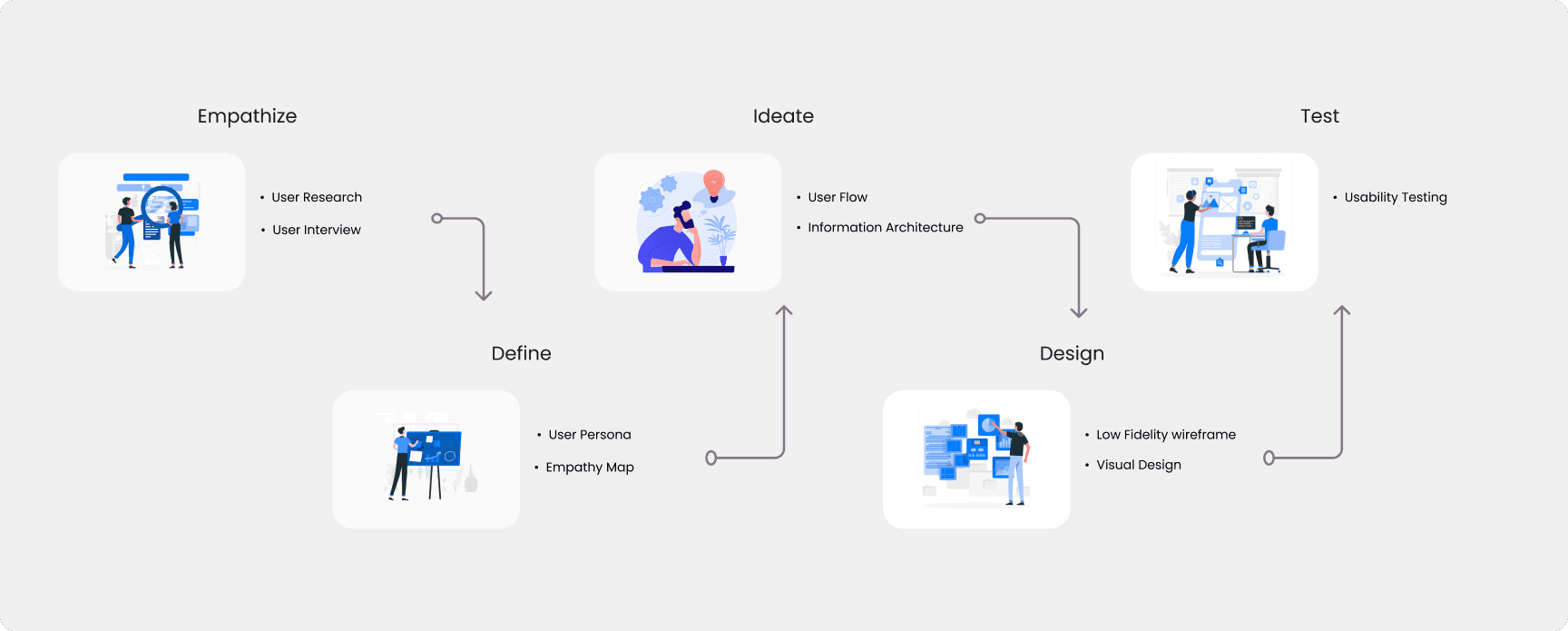
Key UX Challenges
1. Balancing Feature Depth with Simplicity
SongGPT had many planned features, but exposing them all at once risked overwhelming users especially beginners. The challenge was to preserve power while keeping the experience approachable.
2. Inconsistent Design Across Platforms
Mobile and desktop experiences used different colors, components, and hierarchy, weakening brand recognition and usability.
To solve this, I led the creation of a unified design system and worked closely with the CTO and developers to align implementation across platforms.
Target Audience
Primary users:
Emerging and independent artists with strong creative ideas but limited access to studios and production resources.
Secondary users:
Beginner and experienced musicians using AI for experimentation, inspiration, or creative support.
Platforms:
Mobile-first design, scaled to desktop based on usage patterns showing higher mobile engagement.
My Role
Solo designer responsible for end-to-end UX and UI design, including research, UX strategy, visual design, and design systems. Collaborated closely with developers to ensure feasibility and quality during implementation.
Goals
From a UX perspective, the redesign focused on:
Establishing clear visual and text hierarchy
Reducing cognitive overload
Improving usability across mobile and desktop
Designing features that increase engagement without overwhelming users
Supporting faster “time to first song generation”
Accessibility & Usability
Accessibility and clarity were core design considerations:
Improved color contrast for readability
Clear typographic hierarchy across devices
Predictable interaction patterns
Reduced visual noise to support focus and creativity
These choices ensured the platform felt approachable for beginners while remaining powerful for advanced users.
Design Decisions & Solutions
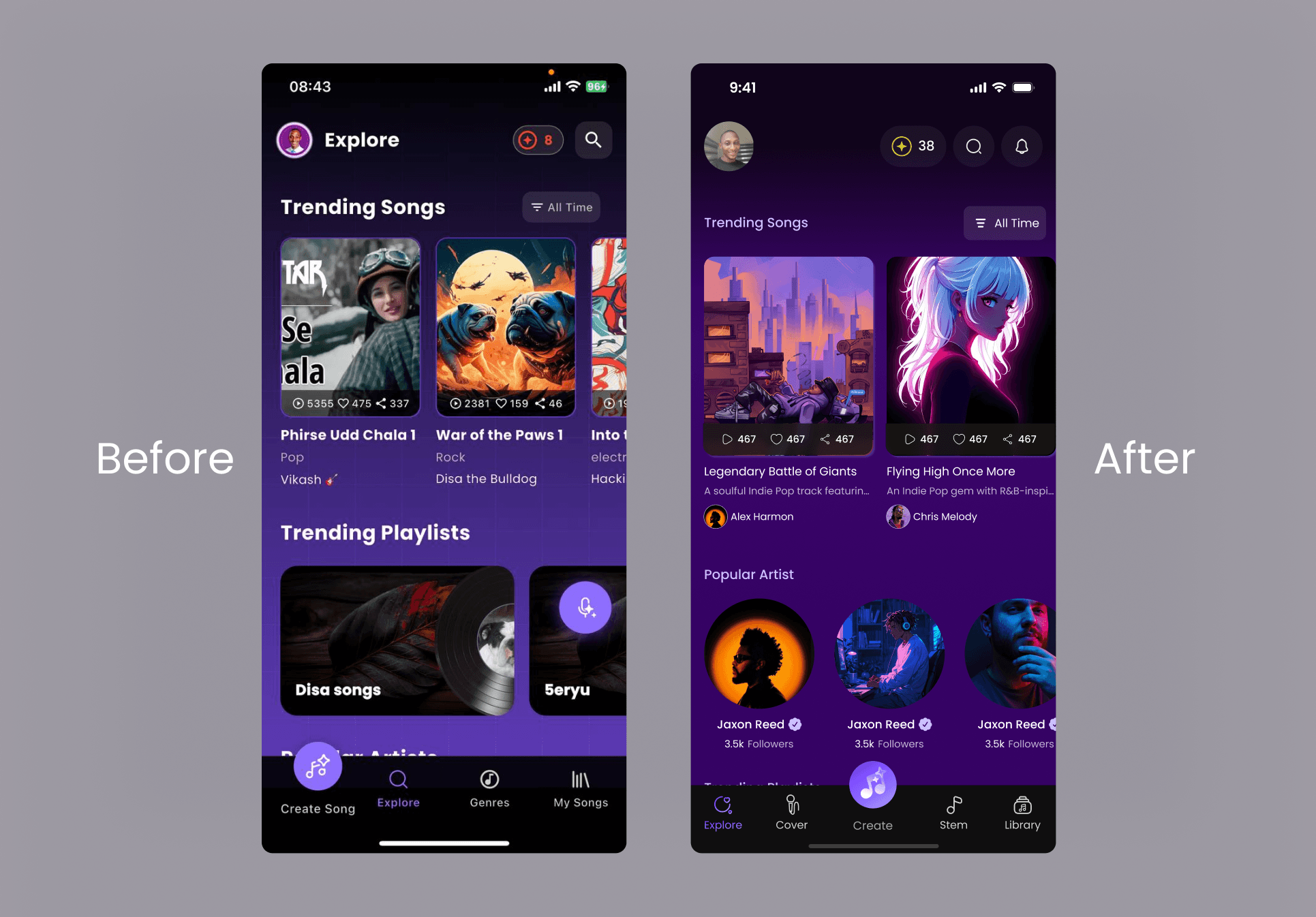
Improved Visual & Text Hierarchy
I redesigned layouts using consistent spacing, typography, and emphasis to guide users through the experience and clearly surface primary actions.
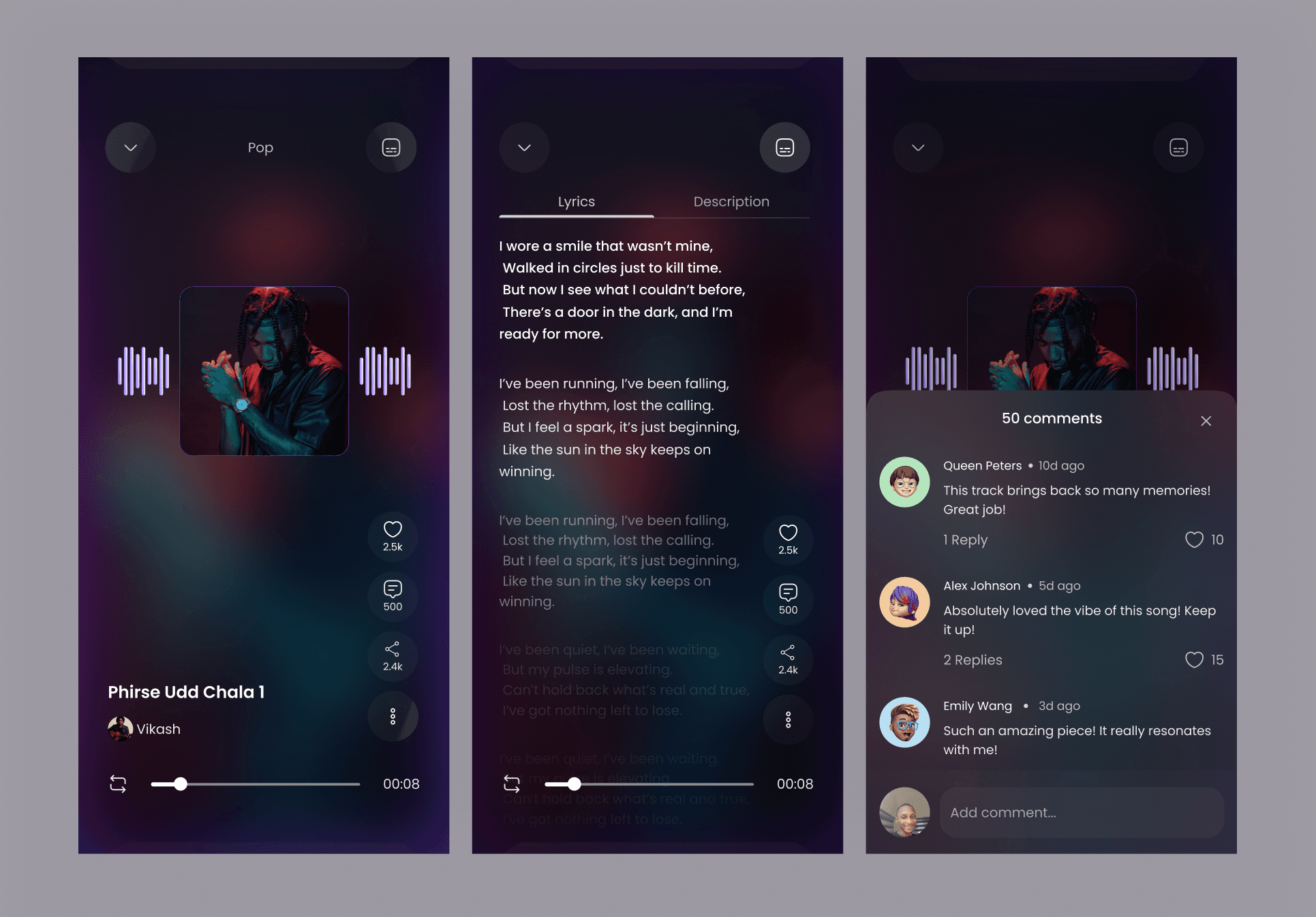
Feature Design for AI Music Standards
I introduced and designed key features aligned with modern AI music platforms:
01
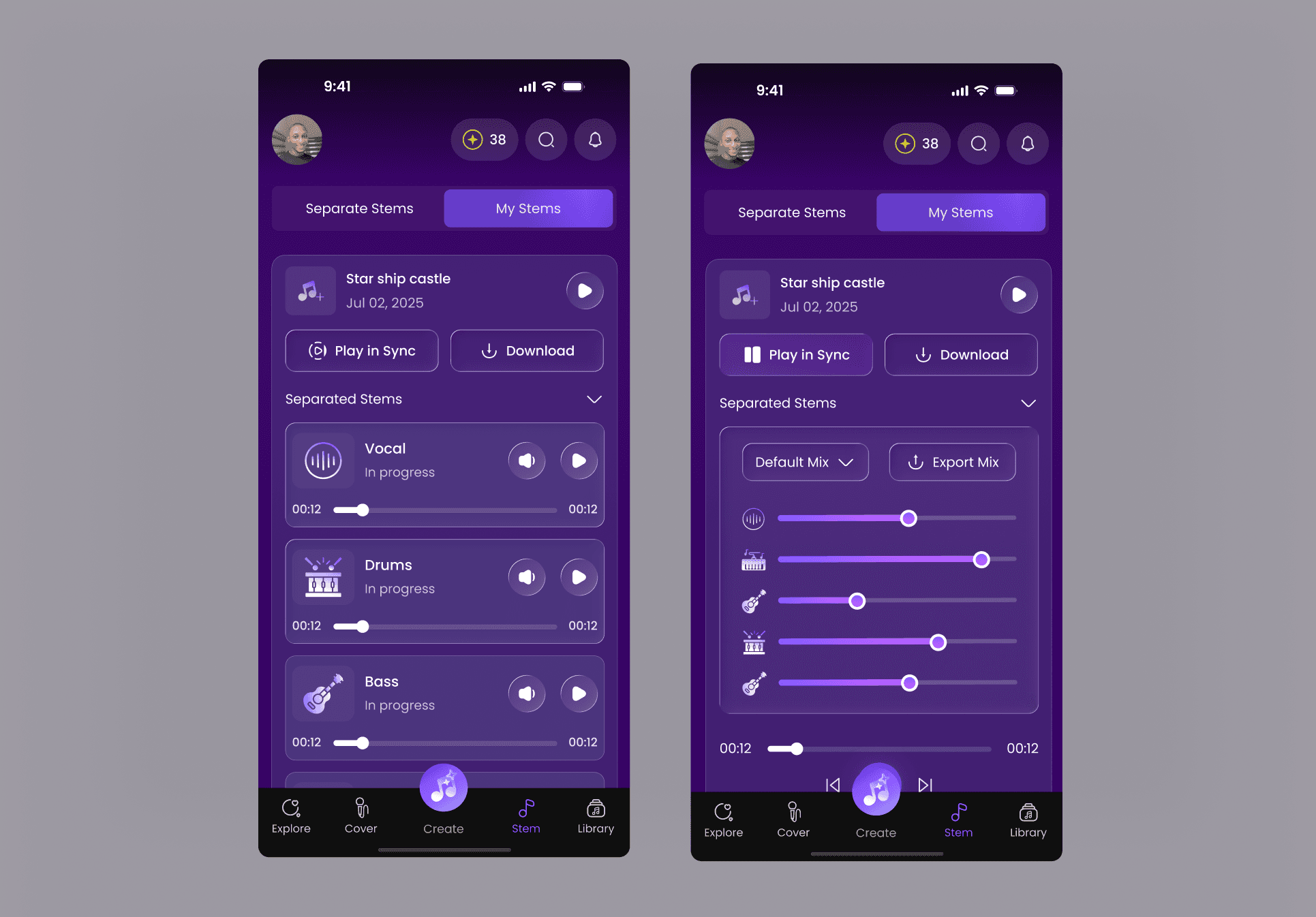
Stem separation
for creative control
02
Cover song generation
for experimentation
03
Follow system
to support community and retention
04
Artist verification
to build trust and credibility
05
Like notifications
to reinforce creator motivation
The Problem
Aspiring and independent artists often struggle to create and share music due to high costs, lack of access to recording studios, and limited technical resources. Existing music tools are often expensive, complex, or intimidating for beginners.
Additionally, the existing SongGPT experience lacked:
Clear visual hierarchy
Consistent design across mobile and desktop
An intuitive creation flow
Trust-building features for creators
This resulted in user confusion, reduced engagement, and lower conversion.
Goals
Goals
Goals
From a UX perspective, the redesign focused on:
Establishing clear visual and text hierarchy
Reducing cognitive overload
Improving usability across mobile and desktop
Designing features that increase engagement without overwhelming users
Supporting faster “time to first song generation”
Target Audience
Primary users:
Emerging and independent artists with strong creative ideas but limited access to studios and production resources.
Secondary users:
Beginner and experienced musicians using AI for experimentation, inspiration, or creative support.
Platforms:
Mobile-first design, scaled to desktop based on usage patterns showing higher mobile engagement.
Key UX Challenges
1. Balancing Feature Depth with Simplicity
SongGPT had many planned features, but exposing them all at once risked overwhelming users, especially beginners. The challenge was to preserve power while keeping the experience approachable.
2. Inconsistent Design Across Platforms
Mobile and desktop experiences used different colors, components, and hierarchy, weakening brand recognition and usability.
To solve this, I led the creation of a unified design system and worked closely with the CTO and developers to align implementation across platforms.
Design Decisions & Solutions
Improved Visual & Text Hierarchy
I redesigned layouts using consistent spacing, typography, and emphasis to guide users through the experience and clearly surface primary actions.
Feature Design for AI Music Standards
I introduced and designed key features aligned with modern AI music platforms:
What Worked Well
The redesign significantly improved structure, usability, and feature clarity across mobile and web. Introducing a design system strengthened consistency and scalability.
During implementation, some discrepancies emerged between design and build. I worked closely with developers to review implementations, provide feedback, and correct issues—treating implementation as an extension of the design process rather than a handoff.
Challenges
Supporting both mobile and web simultaneously increased complexity and required frequent design QA. This reinforced the importance of close collaboration and clear documentation.
01
01
Stem separation
for creative control
02
02
Cover song generation
for experimentation
03
03
Follow system
to support community and retention
04
04
Artist verification
to build trust and credibility
05
05
Like notifications
to reinforce creator motivation
Accessibility & Usability
Accessibility and clarity were core design considerations:
Improved color contrast for readability
Clear typographic hierarchy across devices
Predictable interaction patterns
Reduced visual noise to support focus and creativity
These choices ensured the platform felt approachable for beginners while remaining powerful for advanced users.
Home Screen
Home Screen
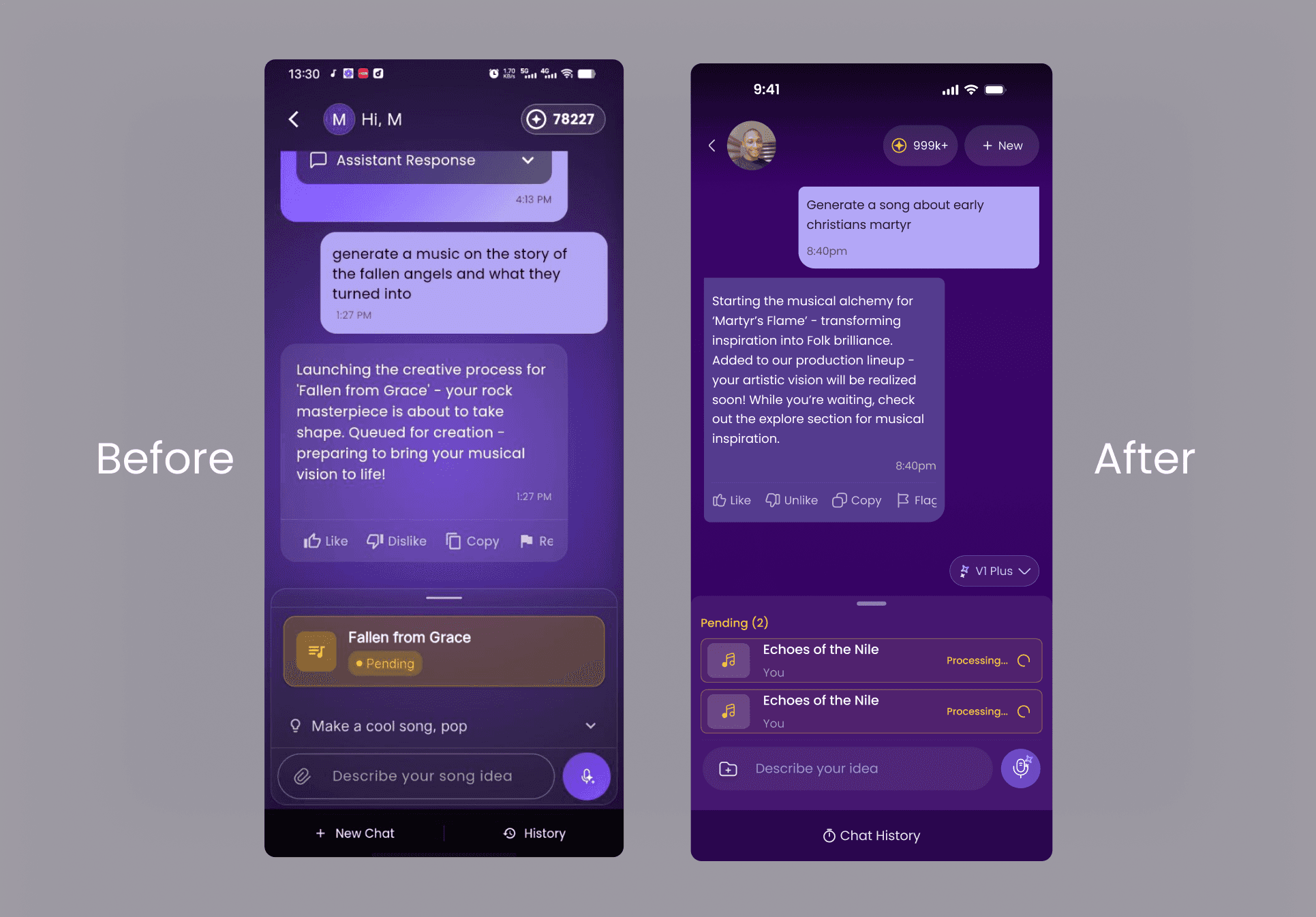
Music Generation Screen
Music Generation Screen
Stem Seperation
Stem Seperation
Song Playing
Song Playing
What Worked Well
The redesign significantly improved structure, usability, and feature clarity across mobile and web. Introducing a design system strengthened consistency and scalability.
During implementation, some discrepancies emerged between design and build. I worked closely with developers to review implementations, provide feedback, and correct issues—treating implementation as an extension of the design process rather than a handoff.
Challenges
Supporting both mobile and web simultaneously increased complexity and required frequent design QA. This reinforced the importance of close collaboration and clear documentation.
Final Takeaway
Final Takeaway
Final Takeaway
This project demonstrates my ability to lead complex redesigns, introduce scalable systems, and collaborate cross-functionally to improve real-world products. It reflects my approach to senior product design: clarity over complexity, systems over screens, and user confidence especially in AI-driven experiences.
This project demonstrates my ability to lead complex redesigns, introduce scalable systems, and collaborate cross-functionally to improve real-world products. It reflects my approach to senior product design: clarity over complexity, systems over screens, and user confidence especially in AI-driven experiences.