DirectStay. Blog, Discovery & Merchant Collaboration System
DirectStay. Blog, Discovery & Merchant Collaboration System
Design
100%
Implementation
58%
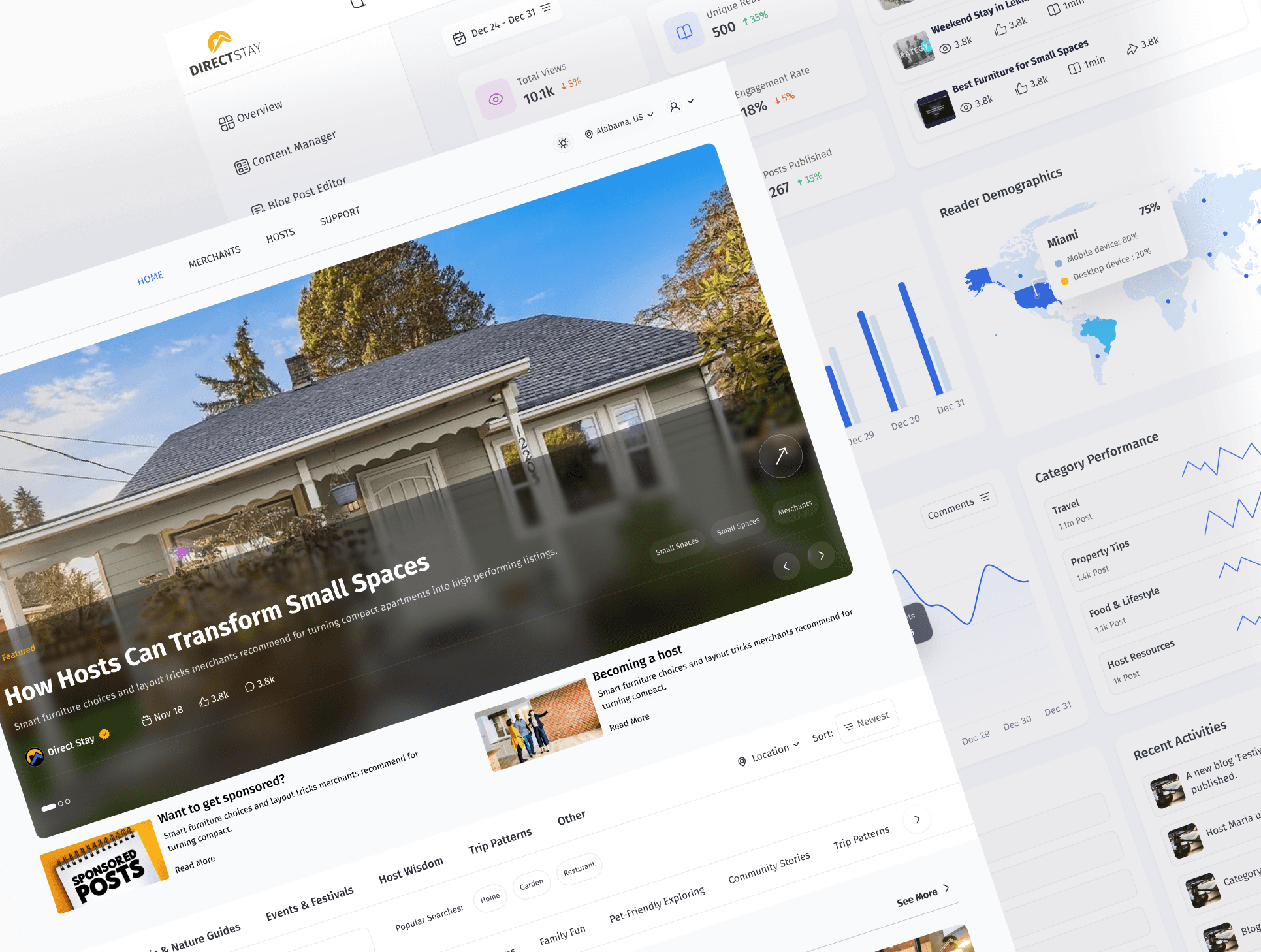
My Role
My Role
Lead Product Designer
UI/UX Designer
Frontend
Project Type
Project Type
Blog
Project Timeline
Project Timeline
1 Month
Team Members
Team Members
Tinuola (Product Manager)
Tinuola (Product Manager)
Michael (UI/UX Designer)
Akinola (Front/backend engineer)
Akinola (Front/backend engineer)
Designing a scalable, accessible AI-powered music creation platform
Design
100%
Implementation
58%
My Role
Lead Product Designer
Project Type
Blog
Project Timeline
1 Month
Team Members
Tinuola (Product Manager)
Michael (UI/UX Designer)
Akinola (Front/backend engineer)
Designing a scalable, accessible AI-powered music creation platform
Design
100%
Implementation
58%
My Role
Lead Product Designer
Project Type
Blog
Project Timeline
1 Month
Team Members
Tinuola (Product Manager)
Michael (UI/UX Designer)
Akinola (Front/backend engineer)
Overview
Overview
Overview
DirectStay is a property listing platform focused on short-stay and travel discovery. Before this project, the platform had no blog or content system. Discovery was limited to property listings, and there was no structured way to surface travel ideas, merchant stories, or city-based insights.
I was responsible for designing a complete blog and content system from the ground up. The system needed to support travelers, hosts, merchants, and admins while integrating cleanly with the existing property marketplace.
DirectStay is a property listing platform focused on short-stay and travel discovery. Before this project, the platform had no blog or content system. Discovery was limited to property listings, and there was no structured way to surface travel ideas, merchant stories, or city-based insights.
I was responsible for designing a complete blog and content system from the ground up. The system needed to support travelers, hosts, merchants, and admins while integrating cleanly with the existing property marketplace.
My role and process
As the lead Product Designer, I led the information architecture and interaction design. I began by defining content rules before visual design. I mapped user roles, established canonical categories, and created validation logic to prevent publishing errors.
Rather than designing a simple blog, I treated it as a system that needed governance, scalability, and future AI readiness.
The Problem
Starting from zero meant there were no existing rules, categories, or workflows. Without a strong structure, the blog risked becoming unmanageable as it scaled.
Key challenges included defining how content should be organized, deciding who could publish what, connecting content to cities without manual effort, and allowing merchants to participate without turning the blog into another marketplace.
The problem
Starting from zero meant there were no existing rules, categories, or workflows. Without a strong structure, the blog risked becoming unmanageable as it scaled.
Key challenges included defining how content should be organized, deciding who could publish what, connecting content to cities without manual effort, and allowing merchants to participate without turning the blog into another marketplace.
My role and process
As the lead Product Designer, I led the information architecture and interaction design. I began by defining content rules before visual design. I mapped user roles, established canonical categories, and created validation logic to prevent publishing errors.
Rather than designing a simple blog, I treated it as a system that needed governance, scalability, and future AI readiness.
Key design decisions
01
I created audience-based content categories to clearly separate traveler content from host and merchant content.
02
I designed a city-based distribution model so traveler blogs automatically appear on relevant city pages.
03
I introduced Trip Patterns to describe how people travel, not just where they go.
04
I defined merchant participation as collaboration within content, not product uploads.
05
I built admin controls for featured banners, sponsored content, and approvals.
01
I created audience-based content categories to clearly separate traveler content from host and merchant content.
02
I designed a city-based distribution model so traveler blogs automatically appear on relevant city pages.
03
I introduced Trip Patterns to describe how people travel, not just where they go.
04
I defined merchant participation as collaboration within content, not product uploads.
05
I built admin controls for featured banners, sponsored content, and approvals.
The Problem
Starting from zero meant there were no existing rules, categories, or workflows. Without a strong structure, the blog risked becoming unmanageable as it scaled.
Key challenges included defining how content should be organized, deciding who could publish what, connecting content to cities without manual effort, and allowing merchants to participate without turning the blog into another marketplace.
My role and process
As the UI/UX designer, I led the information architecture and interaction design. I began by defining content rules before visual design. I mapped user roles, established canonical categories, and created validation logic to prevent publishing errors.
Rather than designing a simple blog, I treated it as a system that needed governance, scalability, and future AI readiness.
Key design decisions
Key design decisions
01
01
I created audience-based content categories to clearly separate traveler content from host and merchant content.
02
02
I designed a city-based distribution model so traveler blogs automatically appear on relevant city pages.
03
03
I introduced Trip Patterns to describe how people travel, not just where they go.
04
04
I defined merchant participation as collaboration within content, not product uploads.
05
05
I built admin controls for featured banners, sponsored content, and approvals.
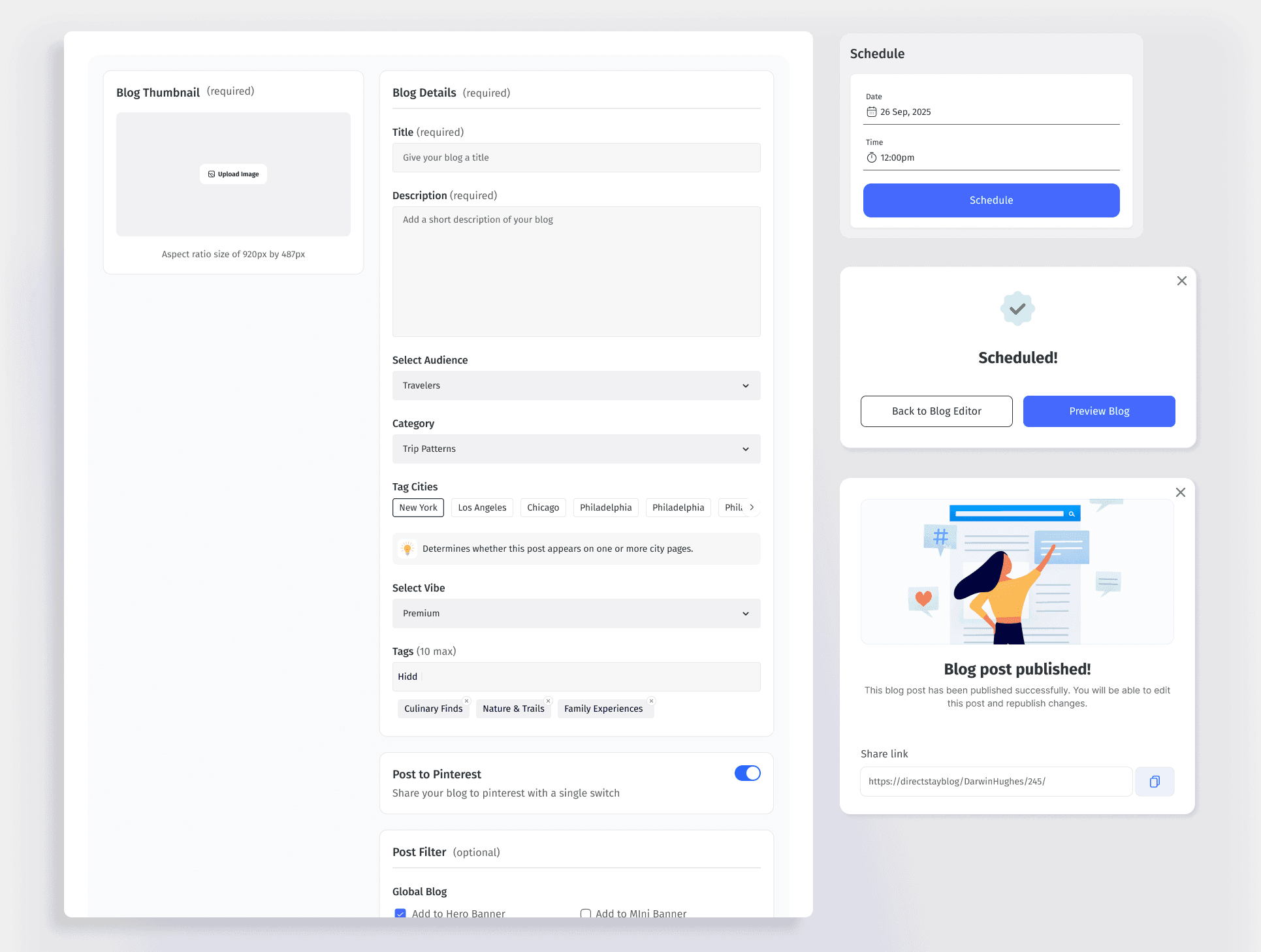
Blog Editor
Blog Editor
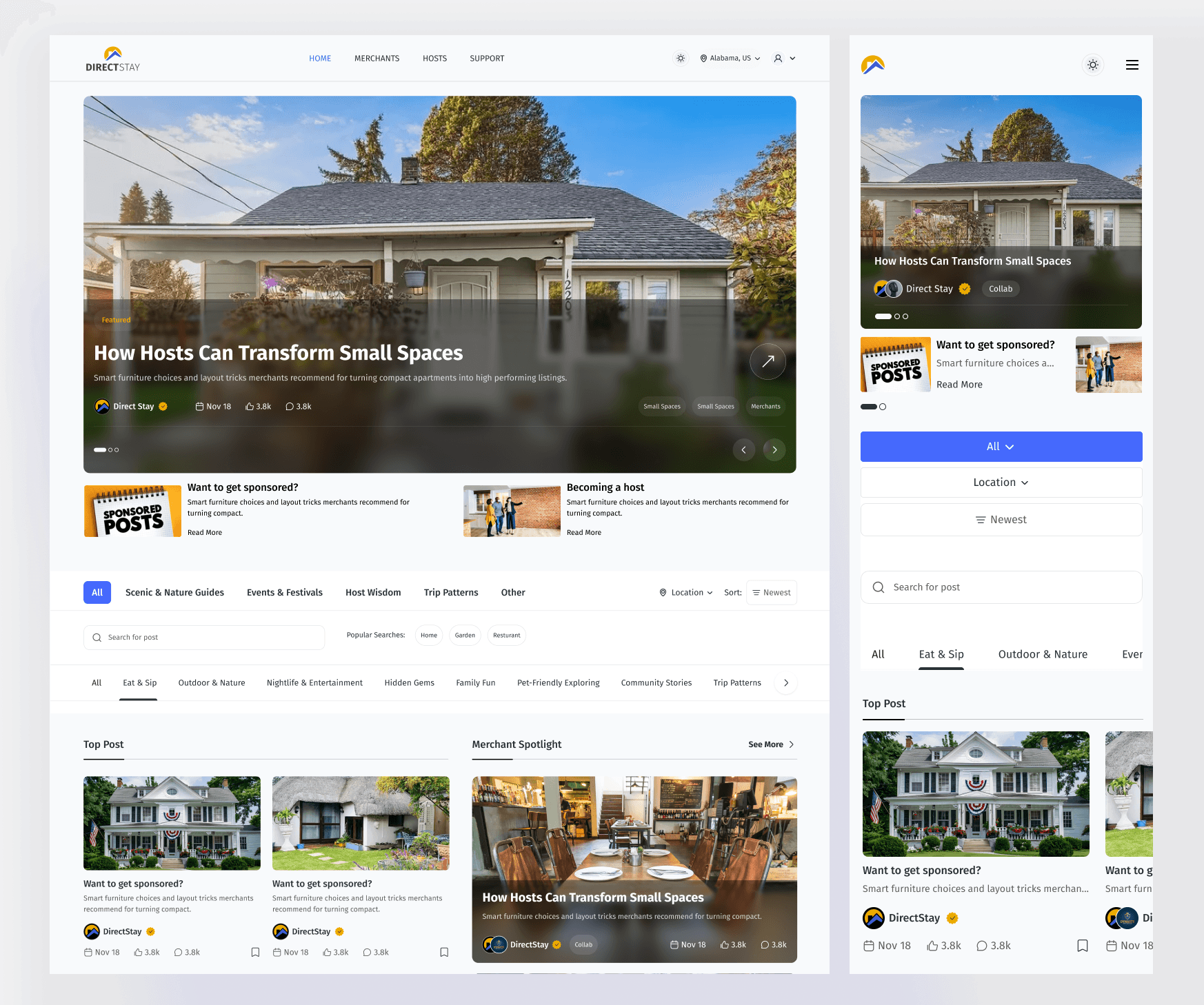
Global Blog Page
Global Blog Page
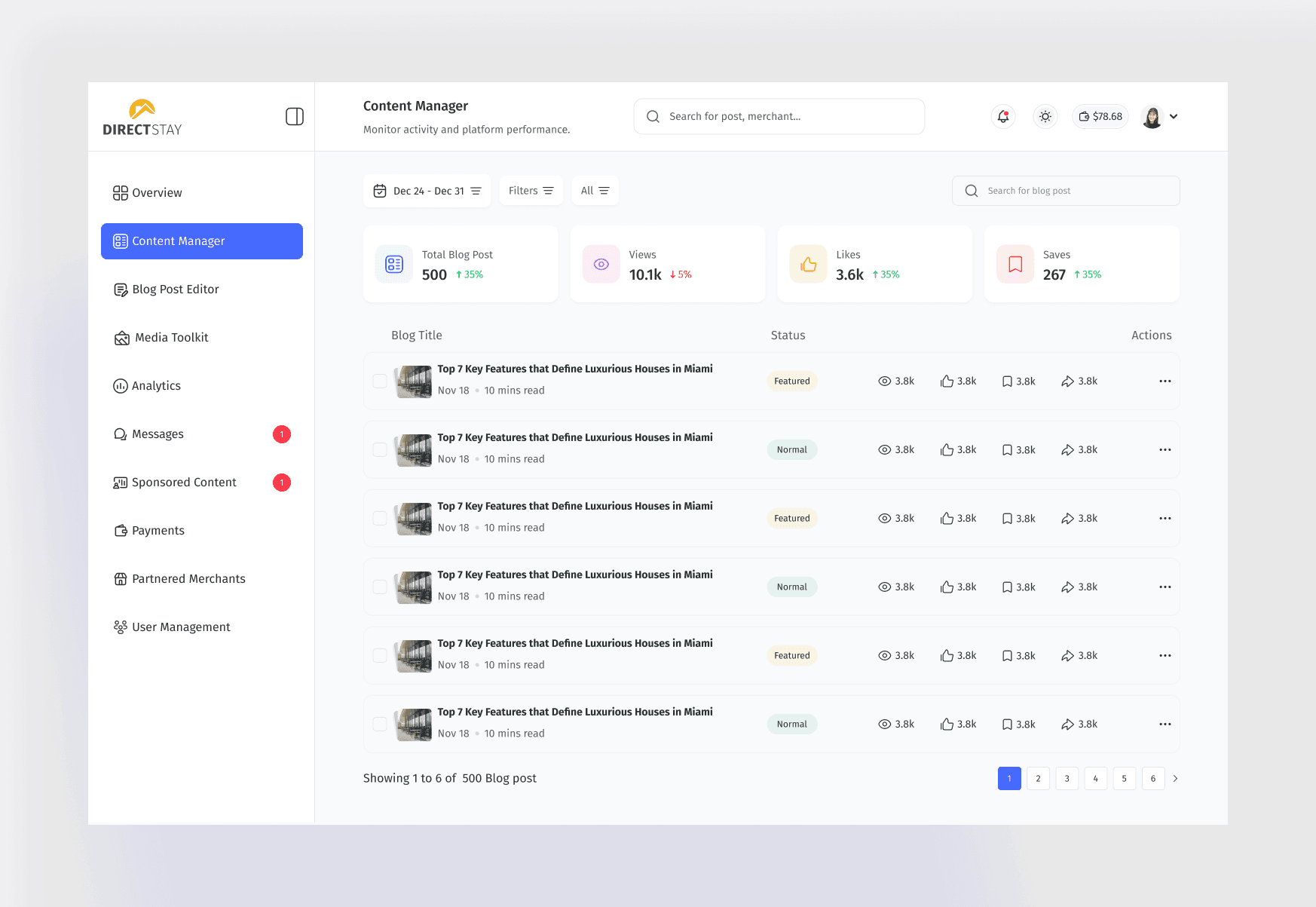
Admin Content Manager
Admin Content Manager
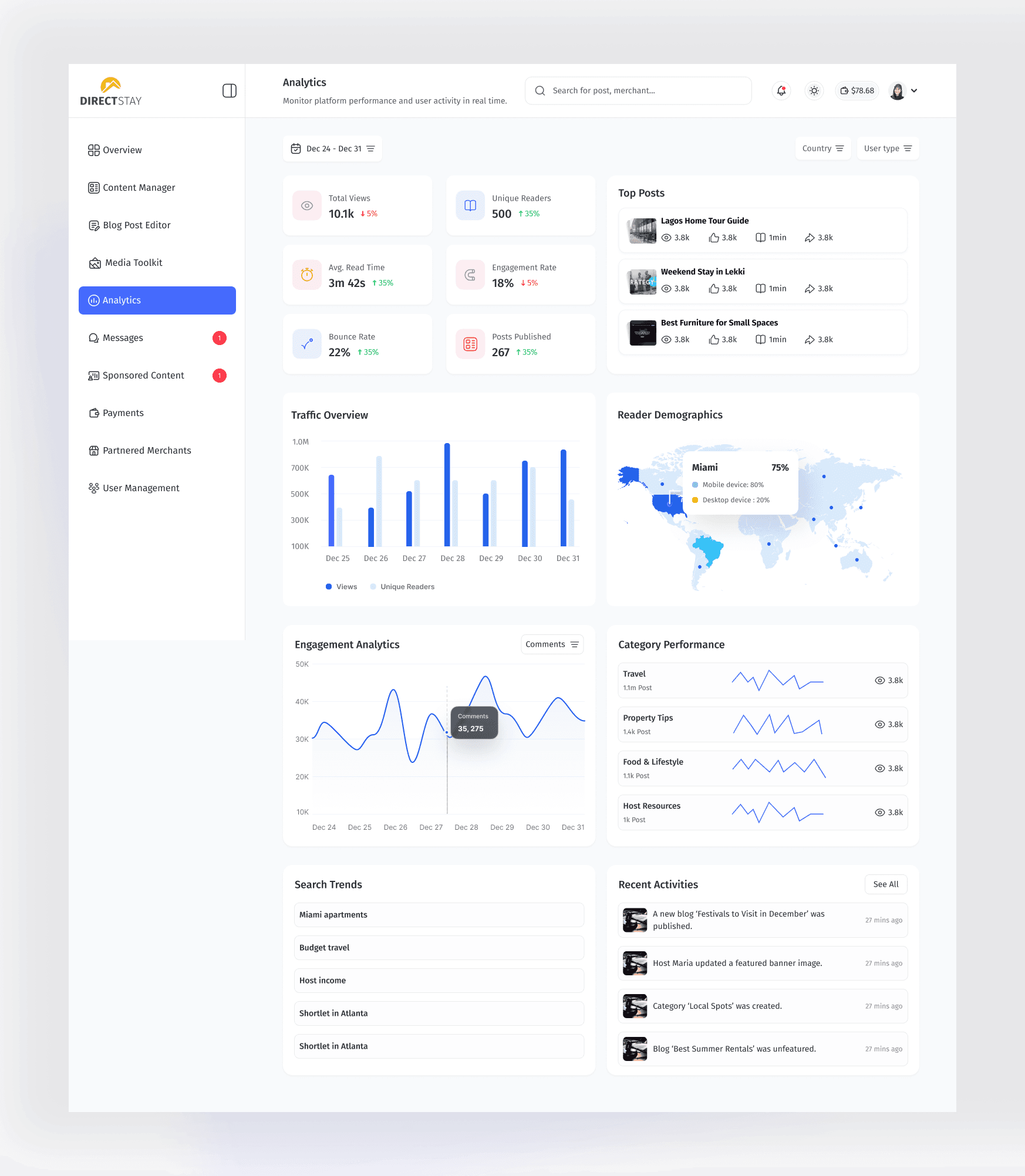
Admin Analytics
Admin Analytics
Outcome
Outcome
Outcome
The result is a scalable blog system that feels simple on the surface but is structured underneath. Content is easy to browse, difficult to misclassify, and ready for future AI discovery. DirectStay now has a foundation for content-led growth across cities and audiences.
The result is a scalable blog system that feels simple on the surface but is structured underneath. Content is easy to browse, difficult to misclassify, and ready for future AI discovery. DirectStay now has a foundation for content-led growth across cities and audiences.